Our Programs & Initiatives

Four program areas and seven key strategies working together to protect children, empower women, and strengthen communities across Ghana.

Our Program Areas

Integrated interventions across child protection, women empowerment, education, and agriculture.

Child Protection
Child Protection
Child Protection Committees active across operational communities
Child Protection

Child Protection

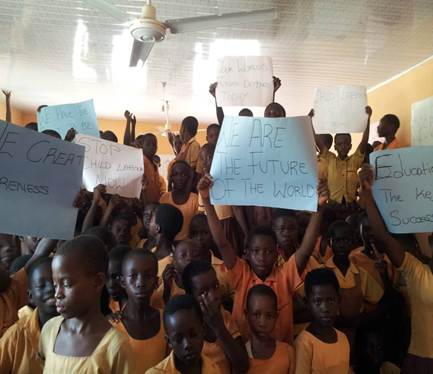
We work closely with government agencies to raise awareness on child labour and early child development. We use the Ghana Child Labour monitoring system and establish Child Protection Committees to identify at-risk children and households and remediate them by addressing the root causes of child labour and abuse. We advocate for the enrollment of every child of school-going age.

Child Protection Committees active across operational communities
Get Involved
Women Empowerment
Women Empowerment
42% of VSLA loans invested in business by participants
Women Empowerment

Women Empowerment

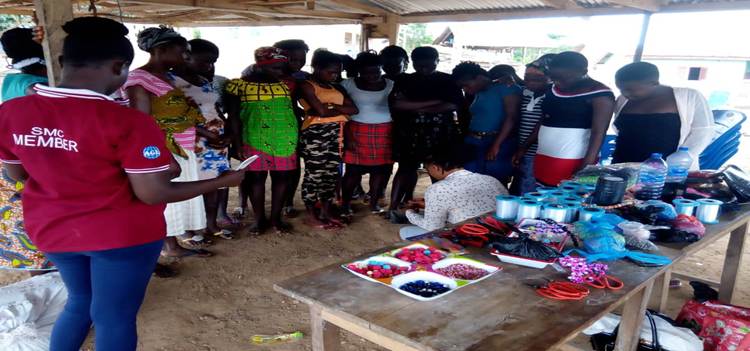
We are committed to expanding women's access to finance through Village Savings and Loans Associations (VSLAs) and improving livelihoods by investing in women's skills development and business management. We organize women into groups, provide enterprise skills such as soap making, bead making, and commercial vegetable farming, and support them to earn additional income.

42% of VSLA loans invested in business by participants
Get Involved
Providing Access to Education
Education
School infrastructure and SMC support through CAPs
Education

Providing Access to Education

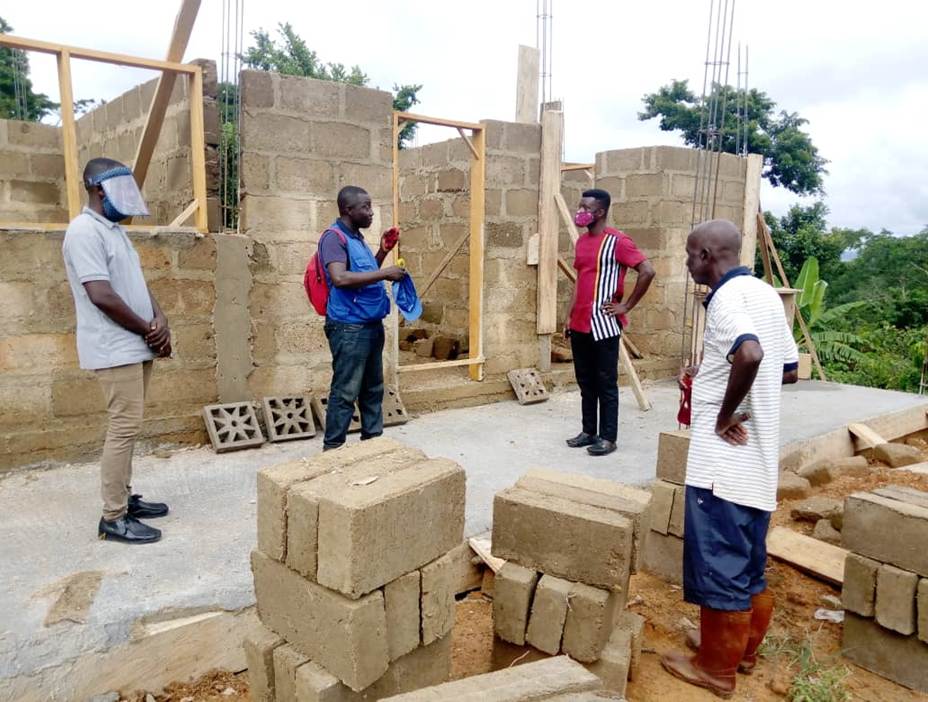
We advocate for the enrollment of every child at school-going age and support the establishment and effective functioning of School Management Committees (SMCs) and Parent Teacher Associations. Our partnership with private sector and multilateral organizations helps us meet school infrastructure needs identified through community action planning in areas where we operate.

School infrastructure and SMC support through CAPs
Get Involved
Agriculture, Livelihood & Environment
Agriculture & Environment
GAPs training and climate-smart agriculture across cocoa communities
Agriculture & Environment

Agriculture, Livelihood & Environment

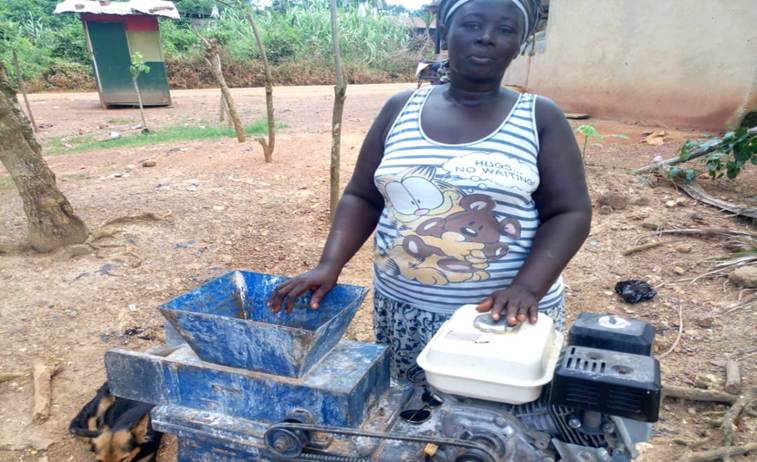
We support project communities with extension service delivery in all crop farming including vegetables. Our priorities include training farmers and communities on Good Agronomic Practices (GAPs), additional livelihoods to diversify cocoa farmer income, empowering women and youth through skills and vocational training while conserving the environment. We provide GAPs on cocoa training to CARE as part of the "Connecting the Unconnected" project.

GAPs training and climate-smart agriculture across cocoa communities
Get Involved

Baseline Survey & Child Labour Monitoring Data

See what we are learning in the field. Download our reviewed reports on child protection, school attendance, and child labour risks across the communities we serve.

View Impact Data

Some Key Strategies

The approaches Nature Aid Ghana uses to deliver sustainable, community-owned development.

To ensure that communities take lead in meeting their long term developmental needs in a context of ownership and sustainability, our interventions use a participatory planning process — an approach of Community–Driven Development which encourages communities to assume full control over planning decisions for local development projects. This community-led approach uses focus group discussions to identify development challenges, local resources, and actions/activities in addressing problems related to intervention areas while making linkages to District Assemblies' development plans for further support.

Nature Aid Ghana supports communities to conduct community needs assessment, identify priority needs, and select interventions or actions and sequence such interventions based on urgency, relevance, priority and define a set of roles and responsibilities in addressing such gaps. The process engages focal groups of men, women, youth and children and the community leadership separately after which community-wide prioritization takes place.

One of the major and notable strategies used to empower farmers in the achievement of all project goals is the VSLA approach. Communities are mobilized into groups within operational areas with savings and loans opportunities. The Village Savings and Loan (VSL) group model is a self-managed and self-capitalized microfinance methodology that mobilizes local pools of investment finance for its members. It offers savings, insurance and credit services in markets outside the reach of formal financial institutions.

Association members are self-selected (membership of between 15–25 or 30 people) and self-governed. The VSL groups are empowered to meet on a weekly basis to deposit their savings and take loans monthly (every 4 weeks). Members of the scheme are coached on how to save, how to disburse and repay loans as well as how to share out their accumulated savings at the end of every year.

The role of NAG has been to create the associations, train them on the VSLA methodology, and provide them ongoing support during the first nine or twelve months' cycle of savings and credit. After this period, the VSLAs become independent and have little or no need for further assistance.

In general, benefits of the VSLA include

  • Access to basic financial services: savings, loans, insurance to members etc.
  • Access to capital to start or expand businesses of cocoa farmers for all year round employment
  • Financial literacy of farmers especially women
  • Access to credit and funds for agricultural based inputs
  • Increased capacity of poor farmers to cope with livelihood emergencies
  • Increase in ability to afford wards' educational needs thereby reducing child labor
  • Increase in women's ability to confidently speak in public and take up leadership roles at the community level
  • Achieve sustainable improvement in livelihood through increased incomes
  • Improved quality of life through enhanced nutrition
  • Promotes a culture of saving within the community
  • Financial inclusion of rural areas
  • Increased assets base of VSLA members
  • Acts as a village bank for farmers

Nature Aid Ghana is already working in parts of the Ashanti, Western, Ahafo and Central regions on this scheme.

Nature Aid before full implementation of interventions conducts surveys to capture benchmark information and the prevailing conditions regarding focus areas and analyses them for project purposes. Famous among them are the Ghana Child labor data collection or GCLMRS data and gender data. Specifically, the strategy aims to:

  • Document baseline data for project implementation
  • Determine the extent and depth of issues in the project communities
  • Capture and document gender gaps, children engaged in child labor in all forms and those at risk
  • Document parents or households with child labor victims for support
  • Ascertain the extent of women marginalization and the type of additional livelihoods suitable for women
  • Document needs and gaps in community schools including infrastructural challenges

Nature Aid Ghana adopts good community entry techniques, sensitizations and creates awareness on issues of concern such as information on child labor, promotion of primary school education and women empowerment strategies, extension services, health education, VSLA and gender sensitive information etc. Target groups include community leadership, entire communities, women groups, farmer groups, Faith Based Organizations, youth groups among others.

Nature Aid closely works and collaborates with decentralized governmental departments at the district and regional levels to ensure the smooth implementation of programme goals and objectives. Other stakeholders include communities, public, private and non-profit organizations involved in the development of the area especially the cocoa value chain at the project districts.

Stakeholder engagement promotes effective ownership and sustainability of the programmes.

  • Women groups are fundamental in empowering women into entrepreneurs, politicians, business persons and agents of child protection
  • Women are organized into groups and empowered to learn soft skills in addition to the farming livelihood
  • Nature Aid does market needs assessment to determine appropriate enterprise skills to provide to women and youth. Potential enterprise skills include soap making, Kente weaving, bread making, mushrooms and commercial vegetable farming, bead making among others

Continuous assessment and objective examination of progress towards the objectives of a program or project has been relevant for decision making. NAG provides daily field technical support and periodic project evaluation exercises for decision making. Feedbacks are recycled into implementation process and manages reports on monthly basis internally. There are quarterly reports of activities implemented, outputs, outcomes and impacts as well as a well analyzed MIS data of all VSLA groups to sponsors and donors.

Want to Support Our Programs?

Your contribution directly funds the programs and strategies above. Partner with us to scale our impact across Ghana.